Pressure Regulators
One valve protects your whole plumbing system
We test your water pressure free, then repair or replace your pressure reducing valve — set to a verified 50–60 psi, installed with copper and ProPress.
Licensed
4 Counties
Estimates
The Gatekeeper
Your regulator is the gatekeeper of your plumbing
Your pressure reducing valve stands between the street's high-pressure water main and everything inside your home. When it works, you never think about it. When it wears out — and every regulator wears out eventually — it usually fails open, quietly letting 80, 100, even 150 psi into pipes and fixtures designed for half that.
The damage doesn't announce itself. It shows up as a toilet that refills at 2 a.m., a water heater relief valve that won't stop dripping, faucet cartridges that fail every year, and pinhole leaks in copper that “nobody can explain.” A new regulator, set to 50–60 psi and verified at your fixtures, ends all of it in one visit.
Start with the free test. We'll show you your actual pressure on a gauge, tell you honestly whether your regulator is doing its job, and put the fix in writing before any work begins. If your pressure is already in the safe zone, we'll say so — and the test still costs you nothing.
What's included
- Free water pressure testing
- Pressure reducing valve (PRV) replacement
- New regulator installation (homes without one)
- Pressure set to a verified 50–60 psi
- Copper tie-ins with ProPress press fittings
- Expansion tank check with every install
Know Your Hardware
Anatomy of a pressure regulator
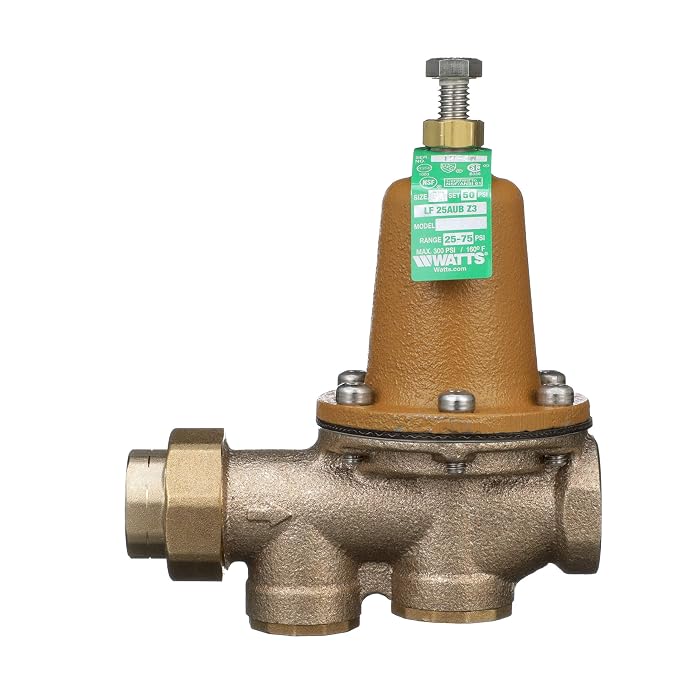
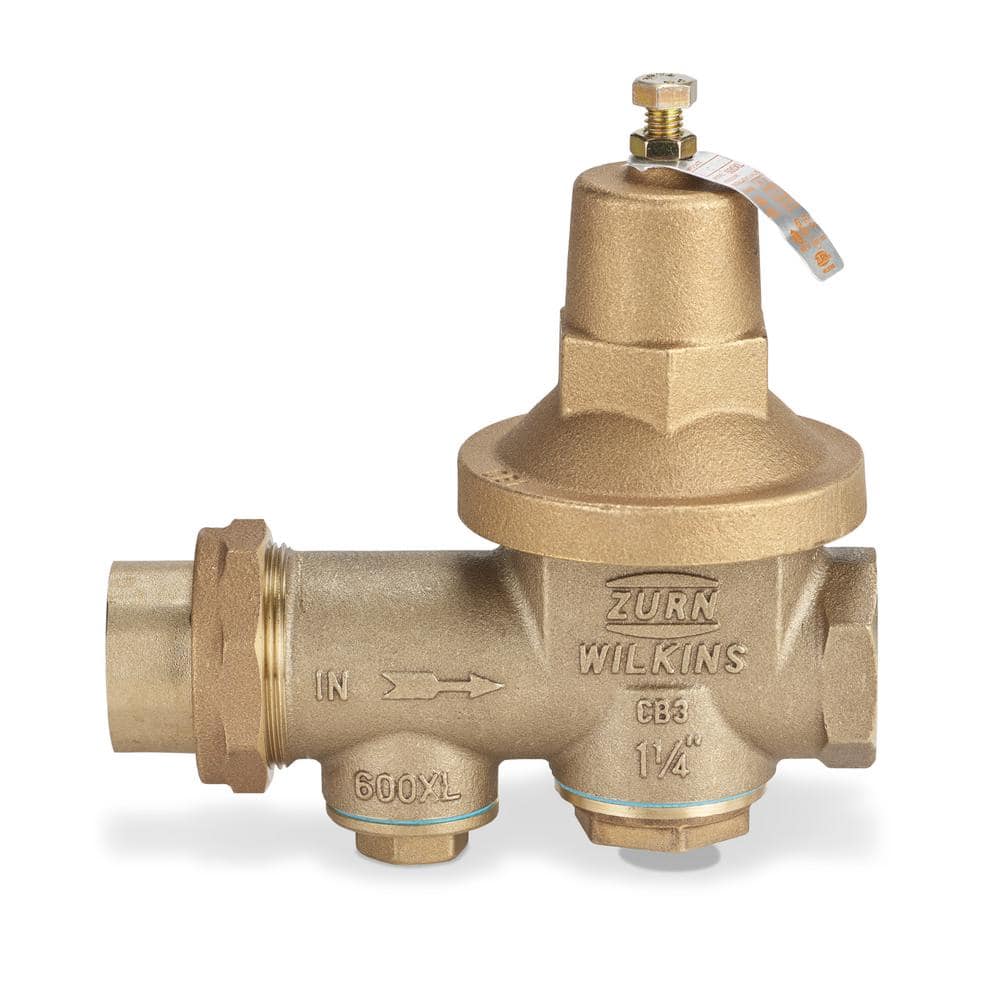
If you go looking for your regulator, here's what you're looking at: a bell-shaped brass valve in-line on the copper main, usually right where the water enters the house or at the meter. This is what a real one looks like — not an expansion tank, not a backflow preventer.
Bell housing & spring
The bell holds the spring-and-diaphragm assembly that throttles street pressure down to your home's set point, around the clock.
Adjustment bolt
One bolt sets the whole house. We dial it to 50–60 psi, lock it, and verify the reading at multiple fixtures before we leave.
3/4 in., 1 in., 1-1/4 in. sizing
Residential regulators match your service line — most SoCal homes take a 3/4-inch, 1-inch, or 1-1/4-inch brass valve on the copper main.
Sweat, press & threaded ends
We tie the new valve into your copper main with flameless ProPress press-fit connections — no torches, no solder fumes, permanent seal.
We install pro-grade brass regulators from the names the trade trusts — including Zurn Wilkins (like the 600XL series) and Watts — because this one valve protects everything downstream of it. It deserves the good hardware.
Why Elite Plumbing
Done right, the first time
Free testing, honest answers
We test your pressure free and show you the gauge. If your pressure is fine, we'll tell you — no sale, no pressure.
Set and verified
Every new regulator is dialed to 50–60 psi and verified at multiple fixtures before we leave. You see the readings yourself.
Installed like it matters
Copper and flameless ProPress connections at your main — the most important joint in your home, done the professional way.
What to Expect
Your regulator job, step by step
Free pressure test
Static pressure tested at the spigot and inside — free, with the gauge reading shown to you.
Regulator assessment
We locate your PRV (or confirm there isn't one) and determine whether it has failed open or worn out.
Written scope
Clear written plan before any work: replacement or new install, set point, and any code-required additions like an expansion tank.
Press-fit installation
Old valve out, new brass regulator pressed in with copper and ProPress — no torches, water off only during the swap.
Set & verify
Dialed to 50–60 psi and verified at multiple fixtures. You see every reading before we call it done.
The Elite Way
Five promises, kept on every job
A real person answers
When you call or text, a person on our team picks up — no voicemail maze, no lost callbacks.
No after-hours surcharges
Nights, weekends, and holidays are priced the same as any other day. No surprise multipliers.
See the evidence
We show you photos and video of what we found, so you can see the problem yourself before approving the fix.
Finished in one visit, whenever possible
Our trucks are stocked to complete most jobs the same day — a routine repair shouldn't take two appointments.
Our own crew
Work within our scope is done by our own team — not handed off to subcontractors.
Licensed. Local. Accountable.CSLB #951583 — every job, every time.
FAQ
Pressure regulator questions, answered
Keep Exploring
Related services & guides
Free estimate • No pressure
Pressure regulator replacement: get your free test
Call or text (909) 223-2110 or request online. Free pressure testing, honest diagnosis, and a written scope before any work starts.
Licensed
4 Counties
Estimates