Water Pressure Specialists — Southern California
Water pressure problems? Start with a free test.
High water pressure quietly destroys plumbing — banging pipes, running toilets, failing water heaters. We test your pressure free and replace failing regulators across OC, the Inland Empire, and LA County.
Licensed
4 Counties
Estimates
The Hidden Problem
Most SoCal homes get more pressure than their plumbing was built for
Here's the plumbing industry's least-known fact: municipal water systems deliver 80–150 psi to the curb so water reaches every home on the grid — including homes uphill. Your fixtures, water heater, supply lines, and appliances were designed for 40–60 psi. The gap between those two numbers is where the damage happens.
Hillside neighborhoods feel it worst — pressure climbs at the bottom of every slope — but flatland homes aren't spared. And even homes that once had perfect pressure lose it when the pressure reducing valve at the main wears out. Regulators fail open, silently letting full street pressure into the house.
The result shows up as banging pipes, toilets that refill on their own, water heaters that die years early, and pinhole leaks nobody can explain. One valve — a pressure regulator set to 50–60 psi — fixes all of it. And finding out whether you need one costs you nothing: our water pressure testing is free.
Free offer
Free water pressure testing
We'll test your static pressure at the spigot and inside your home, show you the gauge reading, and tell you honestly whether your pressure is in the safe zone — free, no obligation, everywhere we serve.
CSLB #951583 · Available across Orange, Riverside, San Bernardino & Los Angeles counties.
Symptom Checker
How to tell your pressure is too high
Tap any symptom to see how the valve fixes it — then get your free test and know for sure.
Banging or hammering pipes
That loud bang when the washer or sprinklers shut off is water hammer — pressure spikes slamming through your lines. It's the sound of joints and valves taking a beating.
See how the valve fixes thisToilets that run on their own
When supply pressure overwhelms the fill valve, toilets refill randomly and waste water around the clock. A regulator set to 50–60 psi ends the phantom flushing.
See how the valve fixes thisDripping T&P relief valve
The temperature-and-pressure relief valve on your water heater drips when pressure climbs too high. Ignore it long enough and the tank pays the price.
See how the valve fixes thisLeaking faucets and fixtures
Cartridges, supply lines, and seals are built for 40–60 psi. Chronic high pressure makes them weep, drip, and fail years early.
See how the valve fixes thisAppliances failing early
Dishwashers, washing machines, and ice makers all have inlet valves rated for normal household pressure. High pressure shortens their lives quietly.
See how the valve fixes thisUnexplained high water bills
Every drip, phantom toilet refill, and weeping valve adds up. Homes with unregulated pressure often use noticeably more water without changing a habit.
See how the valve fixes thisRecognize even one of these? Don't guess — get your free pressure test and know for sure.
The Valve
Meet the valve that protects your whole home
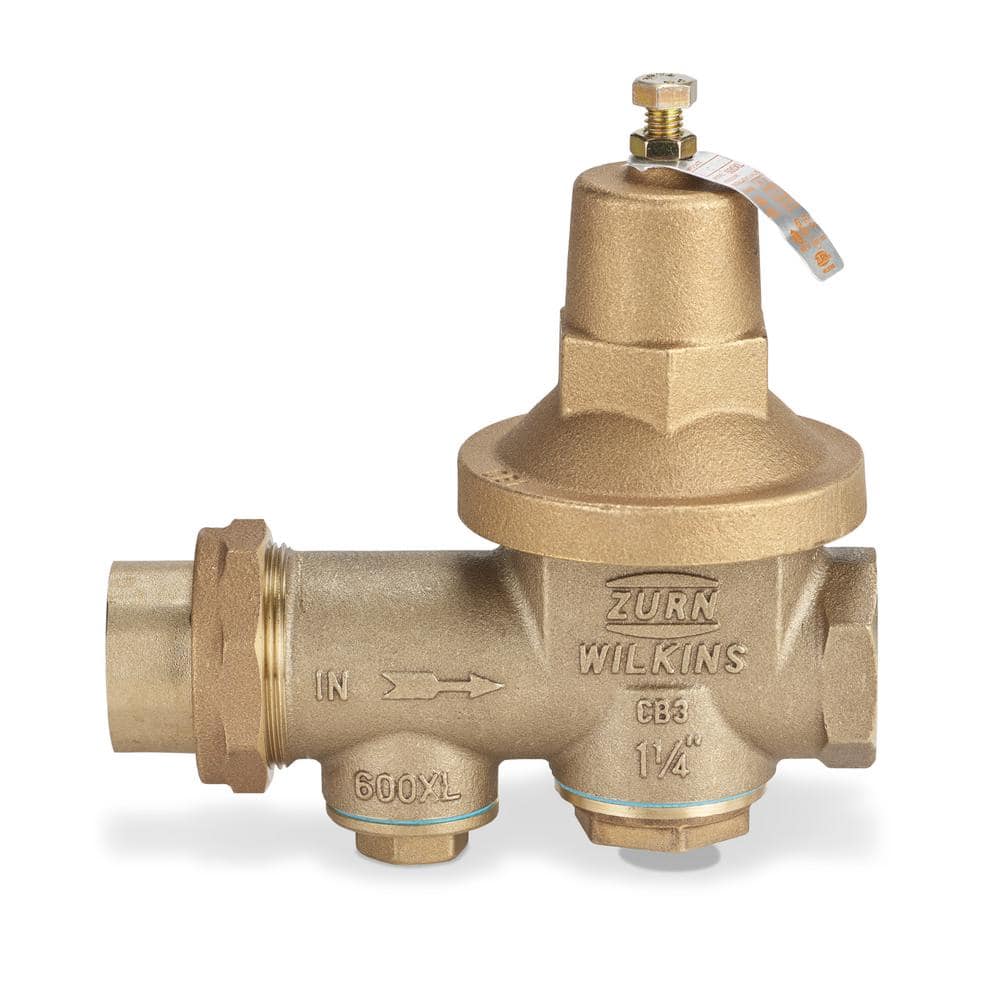
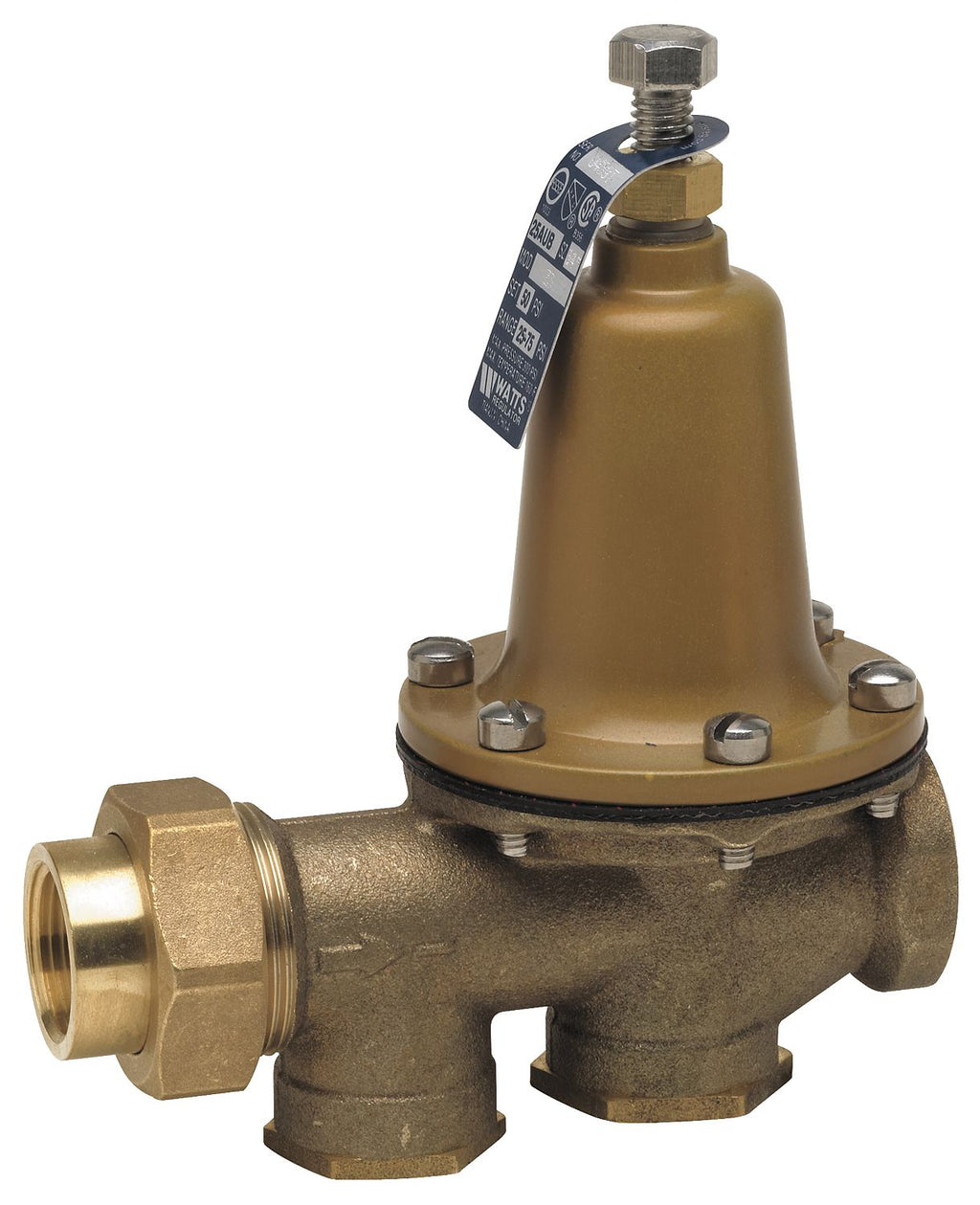
A pressure reducing valve (PRV) is a bell-shaped brass valve installed in-line where your water line enters the home. Inside the bell, a spring and diaphragm constantly balance street pressure against your home's set point — throttling the flow so every fixture downstream sees a steady, safe 50–60 psi no matter what the street is doing.
Bell housing
The signature bell shape holds the spring and diaphragm assembly that does the actual pressure-reducing work.
Adjustment bolt
The bolt on top sets your home's pressure. We dial it to 50–60 psi and lock it in — then verify it at your fixtures.
Inlet & outlet
Water enters from the street side, exits to your home at safe pressure. The cast arrow on the body shows flow direction.
Copper connections
Residential regulators come in 3/4-inch, 1-inch, and 1-1/4-inch sizes, with sweat, press, or threaded ends that tie straight into your copper main.
We install pro-grade brass regulators from the names the trade trusts — including Zurn Wilkins (like the 600XL series) and Watts — tied into your copper main with flameless ProPress press-fit connections. No open torches at your most important joint.
Sizing
Most homes take a 3/4-inch, 1-inch, or 1-1/4-inch valve on the copper main. We size yours to your service line and household demand — then set it, verify it at your fixtures, and show you the readings.
Find out what your home needs — freeBefore & After
One valve changes everything downstream
Before — failed or missing regulator
- 80–150 psi hammering every joint, valve, and fixture
- Banging pipes every time the washer or sprinklers shut off
- Toilets refilling on their own, water bill creeping up
- Faucet cartridges failing every year or two
- Water heater relief valve dripping — tank living on borrowed time
- Pinhole leaks 'nobody can explain'
After — regulator set to a verified 50–60 psi
- A steady, verified 50–60 psi at every fixture in the house
- Quiet pipes — water hammer gone
- Toilets fill once and stay quiet; water use drops back to normal
- Cartridges, supply lines, and seals living their full rated life
- Water heater running at the pressure it was designed for
- One valve protecting every pipe, fixture, and appliance you own
What to Expect
From free test to fixed pressure
Free pressure test
We test your static pressure at an outdoor spigot and at fixtures inside — free, no obligation, and we'll show you the gauge reading.
Find your regulator (or its absence)
We locate your existing pressure reducing valve — many homes don't have one at all — and check whether it's failed open or just worn out.
Written scope
You get a clear written plan: regulator replacement or new install, any code-required additions, and the set point we'll dial in (typically 50–60 psi).
Installation
Old valve out, new brass regulator in at the main — usually a couple of hours, with the water off only while we make the swap.
Set, verify, walkthrough
We set your pressure, verify it at multiple fixtures, and show you the readings before we leave.
How We Install
Copper and ProPress — no torches at your main
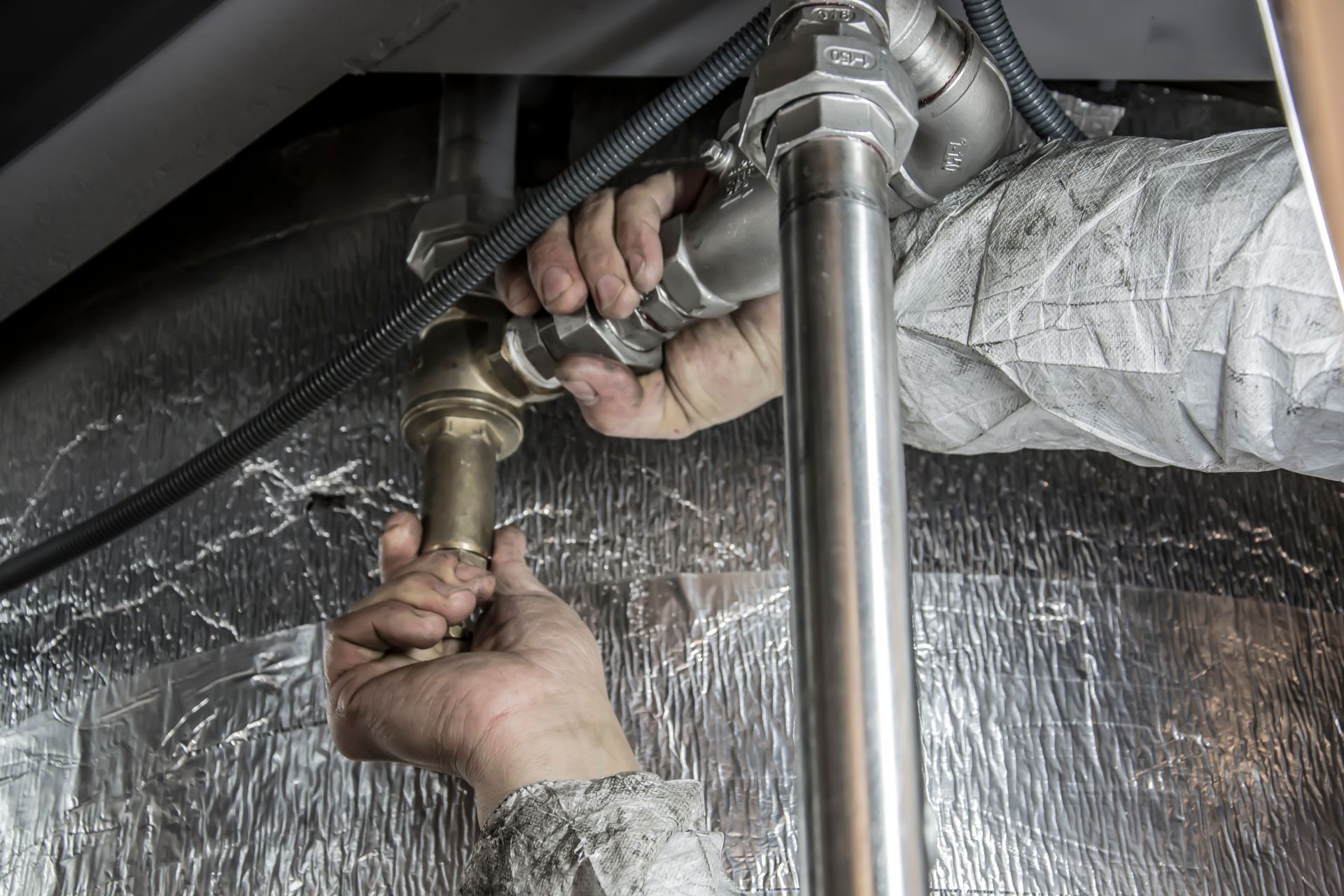
A regulator replacement happens at your main water line — the most important connection in your home. We make it with copper and flameless ProPress press-fit connections: a hydraulic press forms a permanent, watertight seal in seconds, with no open flame, no solder fumes, and no fire risk near your walls.
It's the same press technology trusted in commercial and hospital plumbing, brought to your home's most critical valve. Clean joints, professional installation, and a regulator set to a verified 50–60 psi before we leave.
The Elite Way
Five promises, kept on every job
A real person answers
When you call or text, a person on our team picks up — no voicemail maze, no lost callbacks.
No after-hours surcharges
Nights, weekends, and holidays are priced the same as any other day. No surprise multipliers.
See the evidence
We show you photos and video of what we found, so you can see the problem yourself before approving the fix.
Finished in one visit, whenever possible
Our trucks are stocked to complete most jobs the same day — a routine repair shouldn't take two appointments.
Our own crew
Work within our scope is done by our own team — not handed off to subcontractors.
Licensed. Local. Accountable.CSLB #951583 — every job, every time.
FAQ
Water pressure questions, answered
Keep Exploring
Related services & guides
Free estimate • No pressure
Know your pressure. It's free.
Call or text (909) 223-2110 for a free water pressure test — we'll show you the gauge reading and give you an honest answer, no obligation.
Licensed
4 Counties
Estimates